How food connects us, grounds us, and grows with us.
If there’s one thing that brings people together—no matter where they’re from—it’s food. In our family, food isn’t just nourishment; it’s identity, comfort, connection, and storytelling.
Growing up in Indonesia with Javanese-Chinese roots, I was surrounded by rich traditions tied to meals. My mom would sometimes make red and white congee or fried noodles for birthdays—dishes rooted in symbolic meaning. During Chinese New Year, we’d have special pork dishes, which weren’t always easy to find back then. I remember my mom or grandma ordering from a vendor who sold them in front of the church gate. It felt like such a small but important ritual, one that quietly stitched together our heritage.
On my husband’s side, food traditions also run deep. His mom prepares family recipes for special gatherings—tamales for Día de la Candelaria, or chiles en nogada for Mexican Independence Day. He often helps her in the kitchen, learning the motions of memory and love that come with every stir, fold, and flavor.
Now, we’re a multicultural family of three—Indonesian and Mexican—living in Spain. And food has become a beautiful, evolving thread in our daily life, helping us celebrate our roots while embracing where we are now.
Blending Traditions, One Dish at a Time
We still hold onto some of our family rituals, but we’ve learned to be flexible with them. For birthdays, I usually prepare fried noodles, an Indonesian classic. But this year, my husband was craving frijol con puerco—so that’s what we had. And on Mexican Independence Day last year, we made pozole together. We even have spontaneous taco when we find good shrimp at the local market—tacos de camarón, done our way.
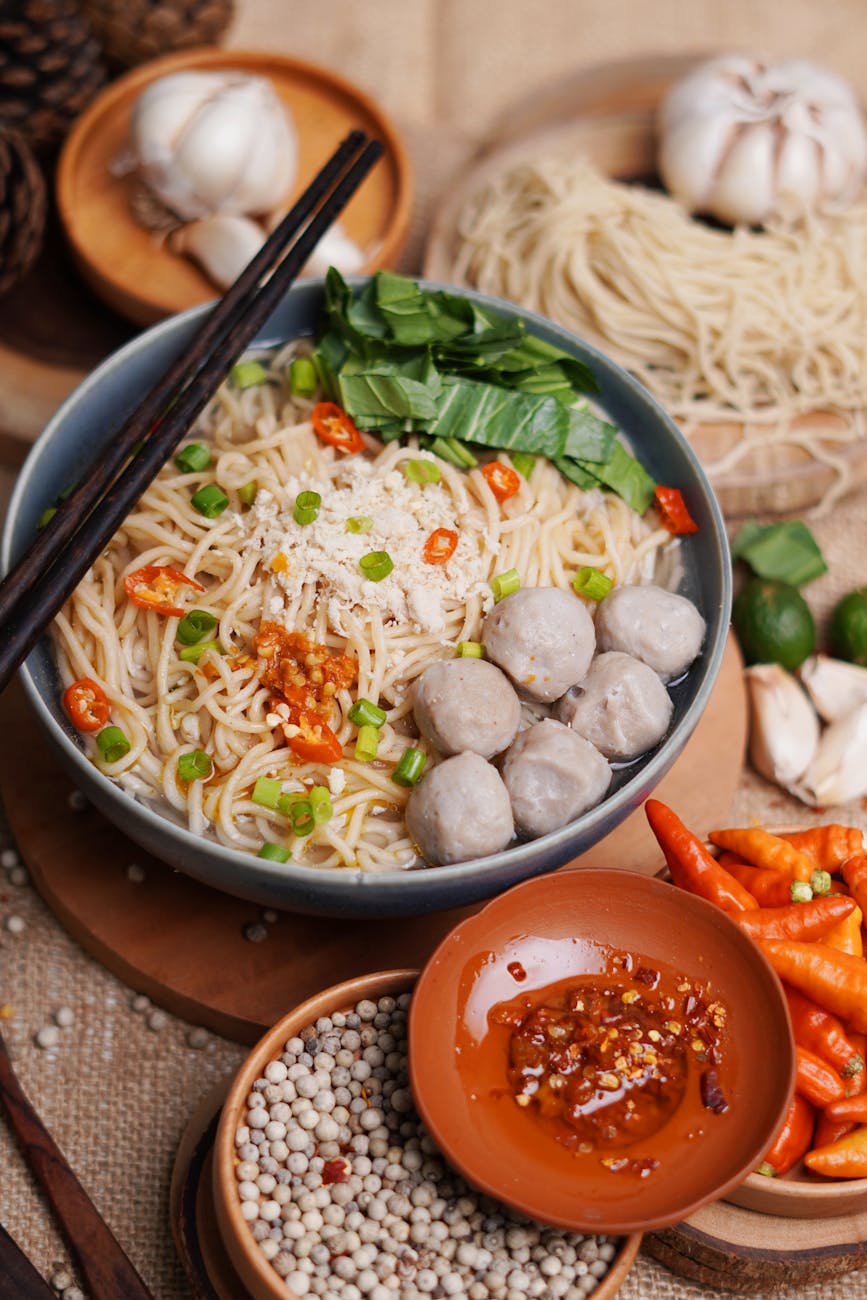
Winter in Spain has become a new canvas for familiar comfort food. On cold days, I find myself turning to bakso—an Indonesian meatball soup that warms more than just the body. My daughter loves it too. It’s amazing how food can transport us instantly to another place, another memory.
At the same time, we’ve embraced Spanish traditions with open arms and curious appetites. We tried panellets and roasted chestnuts for La Castanyada, roscón de Reyes for Three Kings’ Day, and mona de Pascua for Easter. These aren’t dishes from our childhoods, but they’re becoming part of our daughter’s story—and ours.
Celebrating with Flexibility
What we’ve learned over time is that honoring food traditions doesn’t have to mean following them by the book. Our days are full—juggling work, parenting, and just trying to keep life flowing. We may not always have the time or energy to prepare elaborate traditional dishes, but we find small ways to bring meaning to the table.
We don’t meal prep in bulk or follow strict weekly menus. I grew up in a home with fresh food made daily, and to this day, it’s something I try to carry forward. We choose simplicity, not out of compromise, but out of care. Some days that means stir-fried veggies and rice, other days it’s a bowl of ramen or leftover pozole. And that’s okay.
A Table That Reflects Us
Our table tells the story of our family—blended, mobile, and always growing. It holds the flavors of our roots, the traditions of our parents, and the new discoveries we’re making along the way. It reflects who we are: a multicultural family that honors the past, lives in the present, and remains open to what’s ahead.
If there’s anything I’ve learned, it’s that food traditions don’t need to be fixed in stone. They can evolve, stretch, and wrap around the people we become. And in that flexibility, there’s so much beauty—and flavor.
 Busy Bustle
Leave a comment