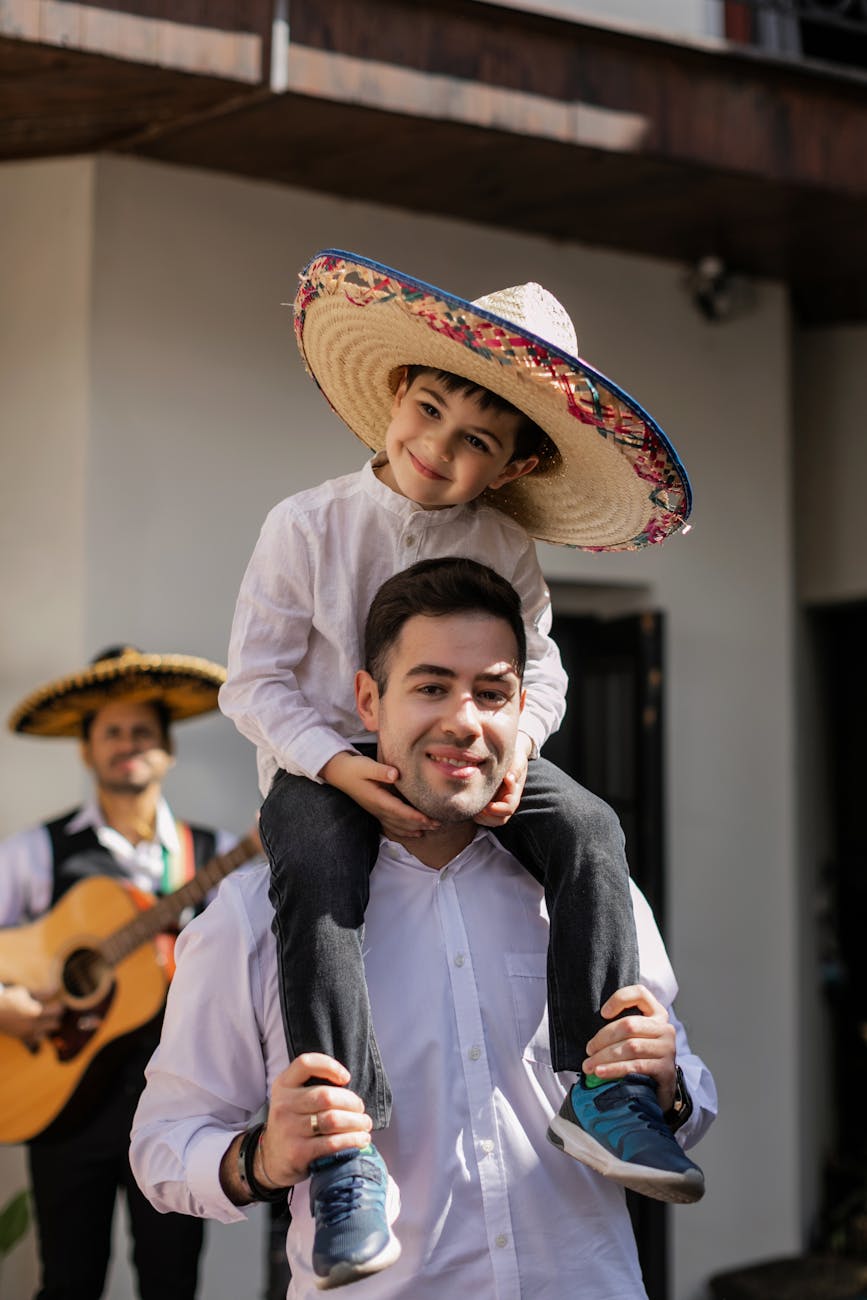
Raising a little human with roots in two very different cultures has been one of the most eye-opening, humbling experiences of our lives. My husband is Mexican, I’m Indonesian, and our daughter—born in Mexico, spent early childhood in Indonesia, and now thriving in Spain—is beautifully in between.
From the beginning, we knew we wanted her to grow up knowing, feeling, and celebrating both sides of her heritage. But what we didn’t expect was how much we would grow and learn through her.
It Starts at Home
Home is where culture begins. In our house, we speak three languages—Indonesian, Spanish, and English—and we let them flow naturally. I speak to her in Indonesian, her dad in Spanish, and between the three of us, English has become our little family’s bridge.
We don’t follow any strict language rules. We follow love, laughter, and what feels natural. If she mixes languages mid-sentence, we gently help her switch. But we never make her feel wrong. This freedom to express herself however she needs has helped her feel that her identity isn’t fragmented, but full.
Kids See the World Simply—Until We Complicate It
One thing we’ve learned is that children don’t naturally see themselves as different—until someone tells them they are. Kids see the world through plain sight. It’s often the adults who begin to point out those differences, even unintentionally, and that awareness can quickly turn into insecurity.
That’s why, as much as possible, we don’t highlight what makes her “different.” If anything, we make her cultural heritage something to celebrate. Her identity isn’t about standing out—it’s about belonging to something beautiful.
We give her freedom to express herself—combining tofu soup with totopos, wearing her Mexican dress one day and a kebaya the next. Those things aren’t odd or “special occasion” items. They’re just part of her world.
Food as a Cultural Bridge
We’ve always used food as a way to stay rooted while exploring new tastes. I cook a lot at home to maintain our familiar flavors, but since moving to Spain, we’ve made room for new favorites too.
Food is a space where cultures merge organically in our house. We serve Indonesian rice with Mexican beans, and no one blinks when she asks for tortilla chips with miso soup. It’s all welcome at our table.
Celebrating, Not Competing
As parents, we’ve made a conscious effort not to turn our cultural backgrounds into a competition. It’s not about whose culture is more dominant at home—it’s about honoring both with equal love and respect.
We focus on the similarities: like how both Indonesia and Mexico use a stone grinder—ulekan (🇮🇩) and molcajete (🇲🇽)—to make spicy salsa. Or how our languages may differ, but we’ve made the effort to understand each other’s. I speak Indonesian to our daughter, her dad speaks Spanish, and somehow, all three of us get each other perfectly.
Living the Traditions
We celebrate both Indonesian and Mexican holidays with equal joy. She knows about Día de los Muertos and Chinese New Year. She’s danced to both Indonesian dangdut and Mexican banda. These little pieces makes up who she is.
And now in Spain, we’re adding new traditions like Día de San Jordi—a celebration with books and roses that we instantly fell in love with.
Conversations That Matter
We have a lot of open conversations—about how we, her parents, were brought up as kids. About how we celebrated things differently, ate different meals, followed different rules.
We also love telling her about the little quirks of each culture—the social norms, the beliefs, the “weird” things we just accepted as normal growing up. And when she asks questions, we simplify, laugh, and explain in ways she can understand.
One thing we always remind her is this: being born into two heritages means double the stories, double the flavors, and double the love. She’s lucky—and so are we.
 Busy Bustle
Leave a comment